
Plants and care
How to block the neighbor’s view with plants without losing light or space
Vivero de Abril · · 10 min read

In this guide
You sit down for breakfast outside, look up, and there it is: the neighbor's window right in front of you. You don't need to turn your garden into a fortress. You need to cover the right angle.
To block the neighbor's view with plants, the first thing is to know where they can see you from and which area you want to protect. A hedge works for some situations; a climber on a trellis, for others. And if the views come from above, increasing the height of the enclosure can take up space without solving the problem.
Let's choose the solution with light, space, and the maintenance you can manage in mind.
The chair test: start here before buying plants
Place a chair where you actually sit: by the table, on the outdoor sofa, or in the reading area. Look toward the windows and balconies from which you feel observed. Ask someone else to hold a piece of cardboard or fabric at different points in your own space.
Check which position interrupts the view without leaving you in the dark. Repeat the test standing up and from the other areas you use. It's an approximate check, but it helps avoid a common mistake: filling the entire perimeter with plants when protecting one section was enough.
Example: if you only want privacy at a table for two, a screen next to that area can be more useful than a hedge that runs along the entire plot. Its position and height are decided on site, not by a universal figure.
1. If the neighbor is at the same level: a side screen
In adjacent gardens or patios with side views, you can consider a hedge, a group of shrubs, or a trellis with climbers. Choose according to the width you have for planting and pruning.
- Hedge: provides continuity, but needs a strip of soil and access to maintain it.
- Grouped shrubs: allow you to concentrate the foliage in specific points and leave gaps where you want to preserve light.
- Trained climber: allows you to organize the growth on a support, although it still needs volume for roots and foliage.
Don't plant right against the wall assuming it will grow like a sheet. Before deciding on the spacing, confirm the species, the variety, and the width you can maintain without blocking the walkway.
2. If they see you from an upper floor: think about coverage from above
A side hedge can hide you from the street and leave the table completely visible from a high balcony. In this case, it's best to consider a pergola with vegetation, partial coverage over the seating area, or, if there is enough space, a well-placed canopy.
You don't need to cover every meter of the garden. Protecting the area where you eat or rest can be enough. Before planting, check what part of the sky the solution would block and how it would affect the light entering the house.
A climber does not replace the structure that supports it. The pergola must be prepared for the weight of mature vegetation and the action of the wind; its installation needs proper assessment. If you prefer a tree, consult our guide on trees for small gardens before choosing based on the size it has today.
3. If you have a small balcony or patio: protect only what is necessary
The priority is to preserve useful space. A planter located on the right side can help more than several pots scattered without a goal. A vertical support can also make use of the height, as long as the plant has space to develop.
Leave the drains, the walkway, and the access for watering free. On balconies, calculate the weight of the containers with wet substrate and confirm the load capacity before installing large planters. A tall screen adds exposure to the wind: it's not enough that it looks stable on a calm day.
If the balcony is already dark, avoid surrounding it with dense foliage. You can concentrate the privacy on the exposed side and keep the front open. To organize the rest, you have our guide on how to arrange a small terrace.
What solution fits your space
| Solution | Where to consider it | Its limit |
|---|---|---|
| Shrub hedge | Garden with a planting strip and access for pruning | Takes up width and takes time to close |
| Shrubs in groups | Localized views and less uniform compositions | You have to check the gaps from the seating area |
| Climber with trellis | Side of patio or terrace with proper support | Needs guidance, pruning, and time to cover |
| Planters with plants | Spaces without planting soil | Greater dependence on watering and the volume of the container |
| Pergola with vegetation | Rest area exposed to views from above | Requires proper structure and changes the light entry |
Plants to gain privacy: choose by function, not just by appearance
Pittosporum: to consider a hedge with evergreen foliage
The Pittosporum tobira can form a dense mass of foliage. Before choosing it, check the cultivar: a dwarf selection will not solve the same height as a more vigorous form. It needs good drainage and watering monitoring during establishment.
In our ornamental pittosporum, you can compare the available sizes. The liters of the pot and the approximate sales height do not equal a fully formed screen: ask about the width and density of the specimen if you need to cover a specific view.

Teucrium: for a light-looking Mediterranean composition
The teucrium for hedges and garden can be considered when you are looking for plant continuity and soft tones. Check the variety and adult size before asking it to close a high view. Not all plants used in hedges provide the same degree of concealment.
If you need a dense visual barrier, you have to consider the actual growth and the formation of the hedge. In a sunny exposure, drainage and watering of newly installed plants also matter.
Climbers: confirm which one you are buying
Star jasmine, Trachelospermum jasminoides, is an evergreen climber that can be trained on a support. It should not be confused with all the jasmines sold for their flower and aroma.
Our jasmine for garden and terrace is identified on the sheet as Jasminum officinale grandiflora. Before choosing it for concealment, confirm its seasonal behavior in your area. If you need privacy also in winter, that difference is important. Spread the branches over the support from the beginning: a plant concentrated on the top can leave exactly the area you wanted to cover visible.
How to gain intimacy without losing all the light
- Cover the problematic angle: keep the sides that do not need protection open.
- Test before planting: a screen near a window can greatly change the interior brightness.
- Decide what you need in winter: evergreen foliage maintains presence, while a deciduous plant changes the coverage with the season.
- Think about the adult width: do not choose only by height.
There is no plant screen that completely hides and lets all the light through. The goal is to find a balance for the actual use of your space.
The mistakes that cause the most work later
- Buying for “fast growth”. You will also have to control that growth when it reaches the desired height.
- Planting very close together to close sooner. The spacing must adapt to the development of the species and the planned formation.
- Promising immediate privacy with small plants. The initial size and establishment time count.
- Using a narrow planter for a very tall screen. The container must allow roots, stability, and manageable watering.
- Forgetting maintenance access. You will need to reach the support, water, and prune.
Frequently asked questions
How long does it take for a hedge to block the view?
There is no timeframe that applies to everyone. It depends on the initial size, the species, the spacing, the planting season, and the growing conditions. Before buying, ask for an expectation adapted to your case; not a promise of closure in a few months.
Can I get privacy only with pots?
It can be viable for specific views, if the containers have enough volume and are well located. In return, you will have to monitor the watering more and plan future maintenance.
What do I do if I need privacy from the first day?
Consider a temporary concealment solution compatible with the place while the vegetation grows. If you add panels or structures, check their fixings and exposure to the wind. Newly purchased plants do not guarantee a continuous screen.
What should I check along the plot boundary?
Before planting or fixing supports, check the conditions applicable to your home and consult with the city hall or the community when appropriate. Resolve the distances, the permits, and the maintenance access for your specific case.
A photo and four pieces of data help more than buying blindly
To study your space, prepare a photo from where you sit, another of the side you want to cover, the measurements, the location, and the approximate hours of sun. Indicate if the views come from the front or from above, and if you will plant in the ground or in planters.
At Vivero de Abril we can help you compare options through the online gardening advice. If you want to integrate privacy with the layout and the rest of the planting, consult the garden or terrace design.
The best screen is the one that allows you to enjoy the space without creating a problem of light, width, or maintenance.
Horticultural references: RHS: plants for plant screens, RHS: design of private areas and Clemson Extension: Pittosporum. The choice must adapt to the cultivar and the local conditions.
General guidance. Needs vary with the plant, location and individual condition.
Keep exploring
Back to all guides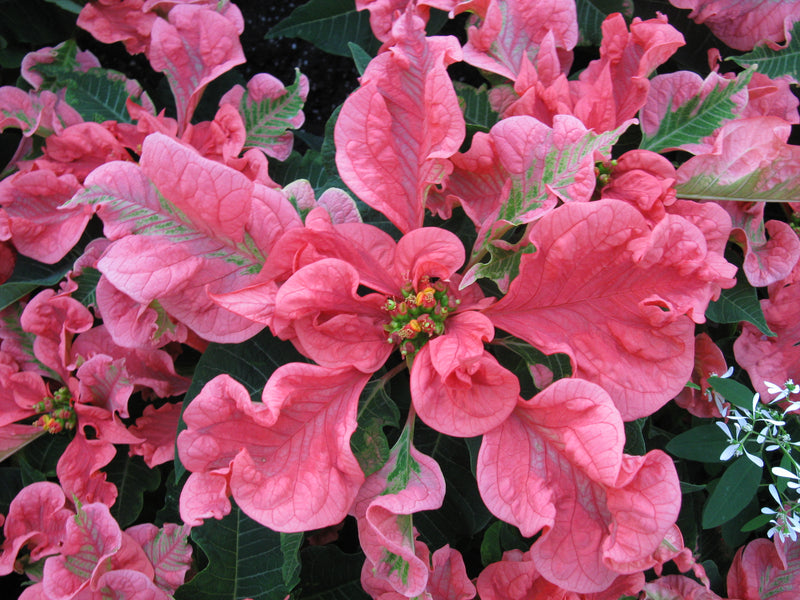
Plants and care
Flor de Pascua: cómo elegirla y cuidarla para Navidad
La flor de Pascua suele entrar en casa entre noviembre y diciembre. La eliges por el color, la colocas donde queda bonita y, a...
5 min readRead guide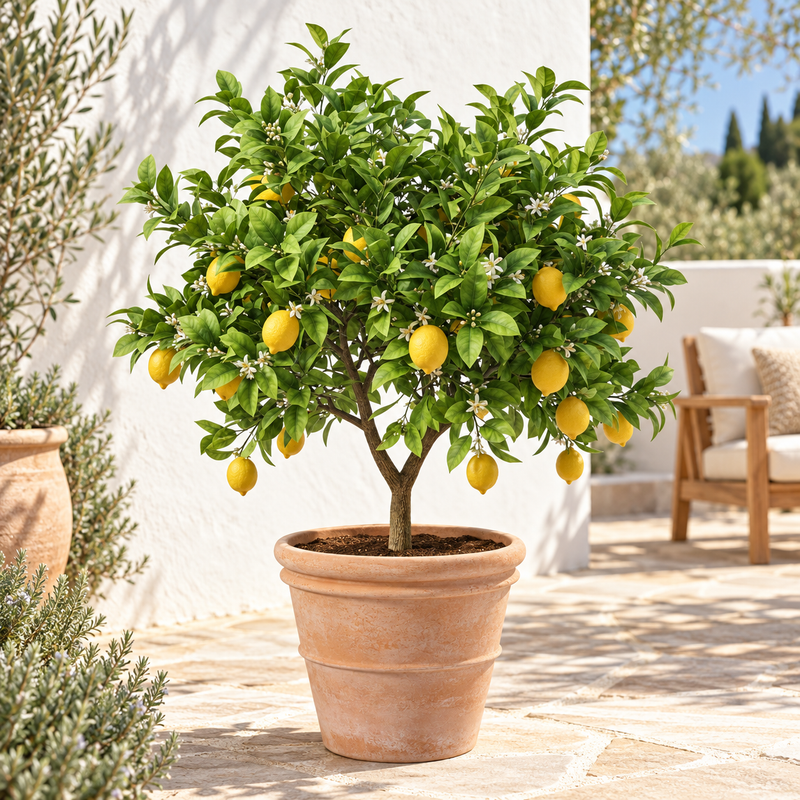
Plants and care
Cómo proteger las plantas del frío: cuáles resguardar y cuándo
En noviembre aparece una duda muy concreta: ¿qué plantas pueden seguir fuera y cuáles necesitan resguardo? La respuesta depende de la especie, la exposición...
5 min readRead guide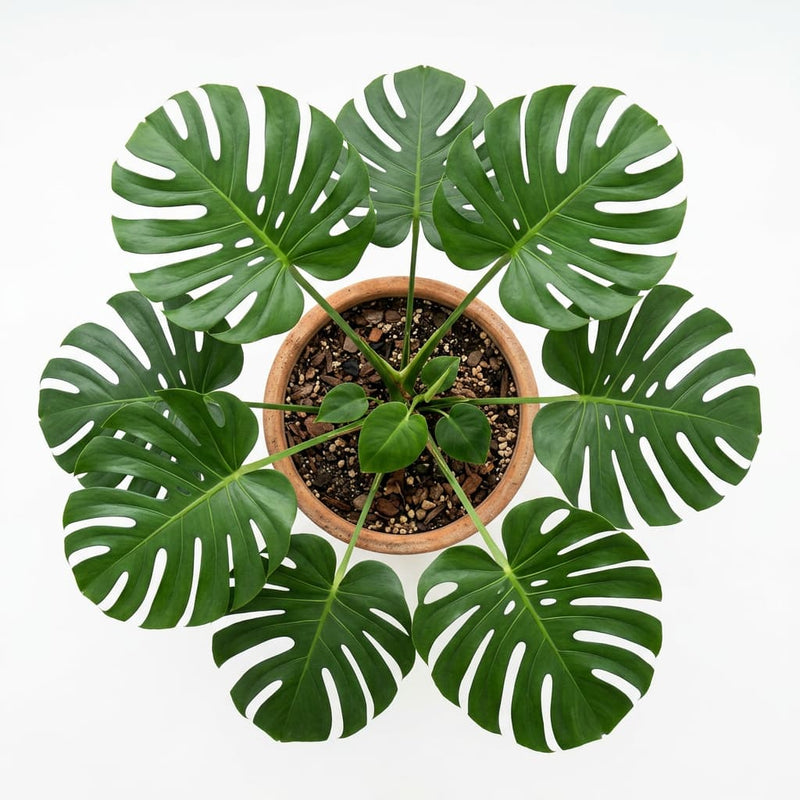
Plants and care
Mosquitas en la tierra de las plantas: qué son y cómo eliminarlas
Mueves una maceta para regar y salen unas mosquitas oscuras. Al día siguiente vuelves a verlas cerca de la ventana. Antes de rociar toda...
5 min readRead guide